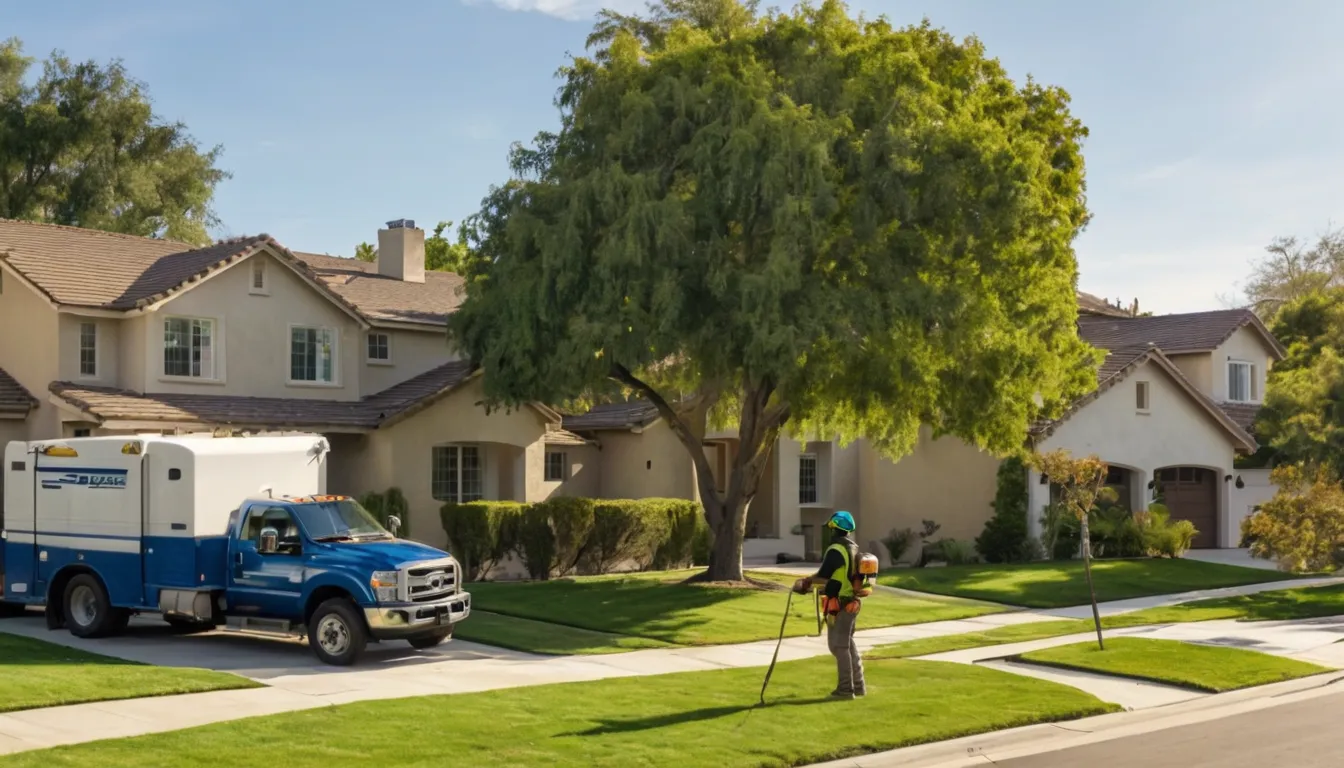
A tree can look fine and still be a risk. Dead limbs, deep cracks, and a new lean are all warning signs. Tree removal is the job of taking the whole tree down, in one piece or in sections, and hauling away what is left.
Dependingexist Tree Service is a referral service. We do not cut trees. We connect you with independent providers in our network, then help you ask good questions before you hire. You will learn what a solid answer sounds like and what red flags to watch for. You will also see how our long dry seasons and winter rain events affect timing. Request an estimate, compare your options, and choose the provider you trust.
Is the Tree a Danger Right Now?
Some trees cannot wait. A trunk may be split. A big limb may hang over your roof. The tree may lean more than it did last week. Stay clear and keep kids and pets inside.
Never cut a damaged tree yourself. Stressed wood can snap in odd ways. If a branch touches a power line, stay far back and tell the utility first. A tree provider cannot work near a live line until the utility makes it safe.
Request a callback to check provider availability, or use the form to request an estimate.
Signs a Tree Should Come Down
Walk all the way around the tree. Look up, then look at the ground. Watch for these signs:
- Dead or bare limbs when other trees are leafy
- Bark that peels off in sheets
- Mushrooms or soft, crumbly wood near the base
- A deep crack in the trunk or at a fork
- Roots that lift a slab, path, or driveway
- A lean that is new or getting worse
One sign may be fixable with trimming. Two or three signs together often point to removal. An arborist (a tree health expert) can tell you which.
Why Homeowners Remove Trees
Most jobs come down to a few reasons. The tree is dead or sick. A storm cracked it. It stands too close to the house. Roots push into pipes or under a foundation. Or you want room for a patio or a new room.
During our long dry seasons, a dead tree also dries out like kindling. Taking it down near the house cuts that risk.
How Tree Removal Works
The Site Visit
A provider looks at the tree, the yard, and everything around it. They check height, lean, fences, roofs, and wires. Then they give you a price. Quote in writing, every time.
The Cutting
This is the tree falling service part of the job. With open space, a crew may fell the tree in one piece. In a tight yard, workers climb and cut it in sections. They lower each piece on ropes. Some jobs need a crane, which is a truck with a long lifting arm.
Cleanup and the Stump
Next comes the mess. Branches get chipped. Logs get hauled off or stacked for you. The stump stays unless you ask for stump grinding. That means a machine chews the stump below ground level. Ask if it is in the quote. Many providers price it apart.
Pick the Right Season
In the dry season, the ground is firm and trucks reach the yard with ease. That makes it a smooth time to book.
Winter rain makes soil soft. Heavy trucks can rut a lawn. After a big wind and rain event, storm tree clearance jobs pile up, and providers get busy. Plan early for any tree you worry about, so you are not stuck in line.
Smoke season brings poor air. Ask the provider how they handle smoky days. Near the coast, mild weather lets work run most of the year.
What Affects the Price
Five things move the price most:
- Tree size and height
- How easy it is to reach
- The tree's health, since weak wood is riskier
- Nearby roofs, wires, and fences
- Extras like stump grinding, haul-away, or a crane
See the cost table on this page for typical U.S. ranges. Your job may differ, so get a written quote.
Permits and Local Rules
Some cities protect certain trees. Large trees and street trees often have rules. You may need a permit before work starts. Birds nesting in a tree can also limit when it comes down. An HOA may add its own rules.
Check with your city office. A good provider will also tell you what they know.
Ask Before You Hire
Plain answers first. Here is what to ask and what a good reply sounds like:
- Are you insured? A good answer is yes, with proof of liability and workers' comp coverage. Be wary of "we don't need it."
- Can I get a quote in writing? A good quote lists the work, the extras, and the price.
- Who will be on my property? A good answer names the crew size and the plan.
- How will you protect my roof, lawn, and fence? Look for a clear plan, not a shrug.
- What happens to the debris and stump? A good answer is specific.
Red Flags
- Pressure to sign on the spot
- A big deposit demanded up front
- A knock on your door after a storm with an offer you did not ask for
- No proof of insurance
- A price given only by word of mouth
If you see one of these, pause. You can always get a second quote.
Getting Ready for Removal Day
Move cars out of the drive and off the street. Clear patio chairs, toys, and pots from the work zone. Tell your neighbors. Mark sprinkler lines and anything buried. Keep pets inside. Stay reachable in case the provider has a question.
After the Tree Comes Down
Walk the yard with the provider. Check the roof, fence, and lawn. Decide what to do with the wood, the chips, and the stump. Fill and reseed the spot.
If a storm caused the damage, some policies may cover sudden damage, so check your policy. Providers can often help document damage for a claim.
Think About Your Home Type
Stucco ranch homes often have low roofs and trees close to the walls. Tell the provider about your stucco, your slab, and any pipes below. Older bungalows may have narrow side yards that limit machine access. Many 1950s to 1980s tract homes sit on small lots with block walls, so drop zones are tight.
Ready to Start?
Send a few details and photos. A local provider can review the job and give you a written quote. There is no obligation.
What's Included
Full Tree Takedown
A provider fells the tree whole or cuts it in sections, then lowers each piece safely to the ground.
Stump Grinding
A machine chews the stump below ground level. Ask if it is in the quote or priced apart.
Cleanup and Haul-Away
Branches get chipped and logs get hauled off, or stacked for you if you want the wood.
Storm Clearance
Fallen or cracked trees after wind and rain. Ask a provider what is possible for urgent jobs.
What Tree Removal Usually Costs
These are typical U.S. ranges. Real prices vary by tree, yard, and season. A job near a roof or wire costs more than an open lawn. Always get a written quote before work starts.
| Job | Typical range | Notes |
|---|---|---|
| Small tree (under 30 ft) | $150 – $600 | Easy access, low risk |
| Medium tree (30–60 ft) | $500 – $1,500 | Price rises near roofs and fences |
| Large tree (over 60 ft) | $1,200 – $3,500 | Often needs climbing or a crane |
| Crane add-on | $500 – $2,000 | Used when space is tight |
| Stump grinding | $100 – $500 | Depends on stump width |
| Haul-away and cleanup | $75 – $400 | Sometimes part of the quote |
How It Works
Request an Estimate
Tell us about the tree, its size, and where it stands. Add photos if you can.
Provider Visits and Gives Quote
A local provider looks at the tree and yard, then writes up the price and plan.
Compare and Choose
Check insurance, scope, and price. Ask your questions, then pick the provider you trust.
Removal and Cleanup Day
The provider takes the tree down, clears the debris, and grinds the stump if you ordered it.
Why Call Dependingexist Tree Service
Plain Answers
Learn what to ask and what a solid answer sounds like before you pick a provider.
Local Providers
Independent providers in our network work in your area and know local weather and rules.
Clear Quotes
Ask for the price, the scope, and any extras on paper so nothing surprises you later.
No Obligation
Request an estimate, compare answers, and decide in your own time. No pressure.
Other Services
Need tree removal in Sacramento?
Tell us about your tree and request an estimate. Prefer to talk? Request a callback to check provider availability.
No obligationTree Removal FAQ
How much does it cost to remove a tree?
Most U.S. jobs run from about $150 for a small tree to $3,500 or more for a large one. Size, access, hazards, and extras like stump grinding all change the price. Get a written quote.
Do I need a permit to cut down a tree in my yard?
Sometimes. Many cities protect large, older, or street trees and ask for a permit. Check with your city office before work starts. A local provider can often tell you what usually applies.
What time of year is good for tree removal?
The dry season is often easiest, since the ground is firm and trucks can reach your yard. Winter rain softens soil, and storm season fills schedules. If a tree looks unsafe, do not wait for a season. Request an estimate soon.
Request a callback
Tell us about your tree and request an estimate. Prefer to talk? Request a callback to check provider availability.
No obligation